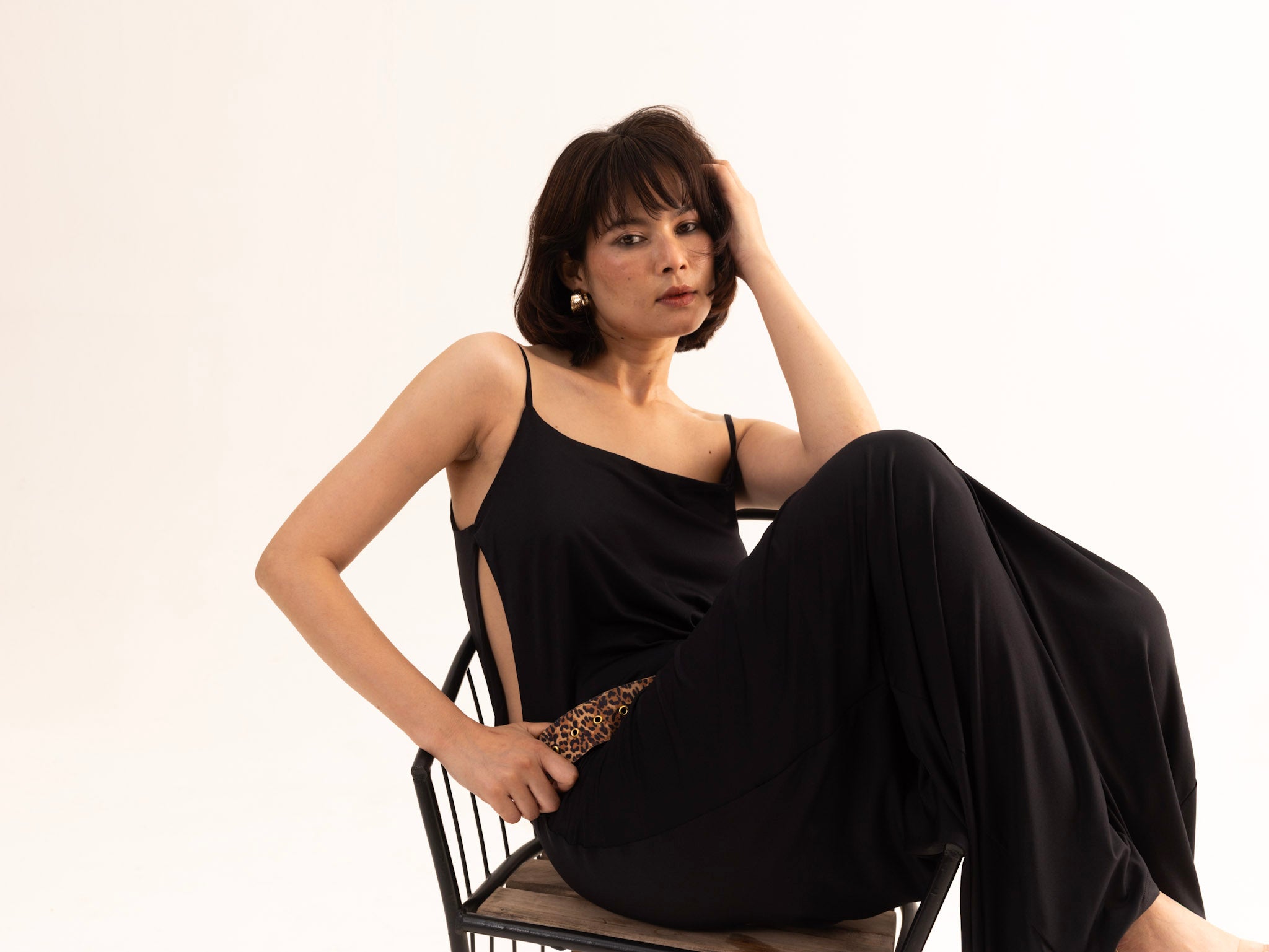

By DORNÁ Milan | Updated 28 September 2026
A party dress should feel secure where the design needs support, allow comfortable movement and fall as the silhouette intends—whether sculpted, draped or fluid. Start with fresh bust, waist and hip measurements, compare them with the brand’s body-measurement chart, then read the product-specific fit notes before choosing your size.
Begin with measurements, not your usual size
Sizing can vary between brands, so the size you normally buy is only a starting point. For a more reliable choice, take three measurements with a flexible measuring tape:
- Bust: Measure around the fullest part of your bust.
- Waist: Measure around the narrowest part of your waist.
- Hip: Measure around the fullest part of your hips.
Keep the tape level and comfortably close to the body without pulling it tight. Stand naturally and, if possible, take the measurements over the base layer you expect to wear with the dress.
Compare the results with the complete DORNÁ Size & Fit Help guide:
| DORNÁ size | UK size | Bust | Waist | Hip |
|---|---|---|---|---|
| XS | 6 | 30–32 in | 24–26 in | 33–35 in |
| S | 8 | 32–35 in | 26–28 in | 36–38 in |
| M | 10 | 35–37 in | 28–30 in | 38–40 in |
| L | 12 | 37–39 in | 30–33 in | 40–42 in |
| XL | 14 | 39–41 in | 33–36 in | 42–45 in |
| XXL | 16 | 41–44 in | 36–38 in | 45–48 in |
Body measurements and garment measurements are not the same
DORNÁ’s size chart lists body measurements, not the finished measurements of the garment.
Body measurements describe you. Garment measurements describe the actual dimensions of a dress. The difference between the two allows a design to create its intended shape: a sculpted dress sits closer to the body, while a fluid or flared style has more room and movement.
This is why two dresses in the same size can feel different. The label may be the same, but the structure, stretch, drape, lining and placement of the waist can all change how the garment sits.
Decide whether you want a sculpted or relaxed fit
If your measurements sit between two DORNÁ sizes, the official guidance is simple: choose the smaller size for a more sculpted fit, or size up for a more relaxed silhouette.
Then consider the individual design. A close-fitting stretch dress and a structured strapless dress do not rely on the same areas for fit. Read the fit and fabric notes on the product page before deciding, paying particular attention to the measurement corresponding to the most fitted part of the garment.
If your bust, waist and hip measurements fall across different sizes, every restrictive point of the garment matters. Send all three measurements with the product name to care@dornamilan.com for personalised guidance before choosing.
How different party-dress silhouettes should fit
Sculpted and body-skimming dresses
A sculpted dress is intended to follow the body while still allowing natural movement. It should sit smoothly without continual shifting or adjustment.
The MIA Denim Print Draped Maxi Dress, for example, combines stretch with a body-skimming silhouette and gathered shaping through the waist and hips. Here, every measurement matters because the dress follows the body through several points.
Structured and strapless dresses
With a strapless design, the bodice is central to the fit. It should feel secure enough to retain its intended position without requiring repeated adjustment.
The VICTORIA Strapless Peplum Drop Waist Maxi Dress uses a structured bodice, sculptural peplum and floor-length skirt. For this kind of silhouette, compare both bust and waist measurements carefully rather than selecting a size based only on the volume of the skirt.
Draped dresses
Draping is meant to fall rather than pull. The folds should retain their softness, while the waist or hip shaping should sit in its intended position.
The COCO Draped Satin Asymmetric Midi Dress is a useful example. Its fluid cowl neckline and cascading asymmetric skirt need room to fall, while the statement waist remains an important fit point.
Adjustable and flared dresses
Adjustable details can offer greater control over part of a dress, but they do not replace accurate sizing throughout the garment.
The RUBY Halter Satin Flared Dress has an adjustable lace-up back and a full flared skirt. The adjustable back helps refine the bodice fit, while your core measurements should still guide the starting size.
Explore more silhouettes in the complete Dresses edit or the limited-run occasionwear in RSVP by DORNÁ.
Your online party-dress checklist
Before adding a dress to your wardrobe:
- Take current bust, waist and hip measurements.
- Confirm that the chart shows body—not garment—measurements.
- Read the individual product’s fit and fabric notes.
- Treat the model’s height and size as visual context, not a substitute for your measurements.
- Identify every area where the design is intended to fit closely.
- Check whether the silhouette is structured, sculpted, fluid or adjustable.
- Decide whether you prefer a closer or more relaxed result.
- Ask the Fit Team if your measurements sit across sizes.
The goal is not to force your body into a familiar size label. It is to choose the size that allows the design to sit and move as intended.
Frequently Asked Questions
Should a party dress fit tightly?
Not necessarily. A sculpted dress is designed to sit closer to the body, while draped and flared dresses need room to fall and move as intended. Follow the product’s fit notes instead of treating tightness as the standard for a good fit.
What should I do if I am between DORNÁ sizes?
Choose the smaller size for a more sculpted fit or size up for a more relaxed silhouette. Also consider the garment’s construction and the area where it is most fitted.
Are DORNÁ’s size-chart measurements for the body or the dress?
They are body measurements. Measure your bust, waist and hips, then compare them with the size chart.
What if my bust, waist and hips correspond to different sizes?
Every restrictive point of the garment matters. Contact the DORNÁ Fit Team with your bust, waist and hip measurements and the product name before choosing a size.
Can I choose my size from the model’s size?
The model information can help you understand length and proportion, but it should not replace your measurements. Use the size chart and product-specific fit notes first.